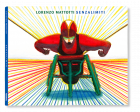
THE VALLEYS OF THE OLYMPIC GAMES:
OCCITANIAN MOTHER TONGUES
To learn more about it
di Fredo Valla
Every recent edition of the Olympic games has highlighted the identity of the host territories.
By this initiative the Province of Torino aims at showing the “genius loci” of the mountain areas where the alpine ski events will take place, by starting from one of the most representative and best-rooted characteristics: the mother tongues, Occitan and Francoprovençal.
We are talking about the classical languages of the troubadours, acknowledged even by Dante Alighieri in his “Comedy” for the quality of their expressive and poetical abilities.
Being able to introduce these deep cultural roots, not without pride, on the occasion of the twentieth winter Olympics and of the ninth Paralympic games means not only reaffirming the fact that the Italian Constitution has recognized these languages by law 482/ 99, but is also a way to reaffirm the vitality and the unchanged expressive importance they have, an essential contribution to the composition of the European identity to build on the valorization of the richness offered by cultural diversity.
We welcome all the guests not only in our national language, but also in the language of our valleys:
Bonjorn amís e benvenguts dins las valadas olimpicas occitanas e franc-provençalas
Boundzort amis è bèinvenu dedin le valadeus oulimpiqueus uzitaneus e francprouvensaleus.
Spokesman for the Arts The President
Valter Giuliano Antonio Saitta
Winter Olympics “Torino 2006” in the Occitanian valleys of Piedmont?
Sure! The capital city of the Olympic games is Torino but several ski contests– crosscountry, downhill, jumping – take place on the snowy slopes of the Chisone, High Susa, Germanasca and Pellice valleys.
The language spoken in these valleys is the langue d’oc, or Occitan. A territory including the Po, Varaita, Maira, Grana, Stura, Gesso, Vermenagna, Bisalta and Quié valleys located between the Cottian and the Maritime Alps, the easternmost part of a country that is not marked on the maps, but nevertheless exists.
These are the Occitanian territories.
Which territories are Occitanian?
This is the area speaking Occitanian, a language originating from Latin, like Italian, Spanish, Portuguese, Catalan, French, Rumanian, Ladin and the languages spoken in Friuli and Sardinia ... This language is spoken from the Alps to the Pyrenees where the four Occitanian valleys of Italy are located with the four “valleys of the Olympic games”; these territories reach the mountains of the Pyrenees and the Atlantic ocean in the west. A small Occitanian territory - the valley of Aran – is located in Spain, in the autonomous region of Catalonia. In the north the territories reach the Central Massif, while in the south the Mediterranean sea is a natural border. There are cities like Toulouse, Marseille, Nice, Avignon, Bordeaux, Montpellier, Limoges and Clermond-Ferrand. The Occitanian valleys of Italy do not include any large cities, but very many villages and small towns nestling on the tops, with a lot of atmosphere, silence and a prestigious alpine architecture. The Occitanian valleys are rich in works of art. There are still many festive events with ancient rituals.
Got it now? Thirteen million Occitanians in three nations: Italy, France, Spain – welcome you here: bonjorn amís e benvenguts dins las valadas olimpicas occitanas! (Hi my friend, and welcome to the Occitanian valleys of the Olympic games)
The Olympic games and the Occitanian civilization: have they anything in common?
First of all they share values. The Occitanian civilization spread by the troubadour poets of the Occitanian territories from the twelfth to the eighteenth century at the European Courts got its inspiration from a few key words:
Jovent: i.e. youth and its ideals
Jòi: joy and the capability of living life happily in all its forms
Paratge: loyalty and nobleness of soul
Pretz: the value of valiant men
Larguesa: generosity, the ability of giving without asking for anything in return
Since their origins and even more after they were renovated by Baron Pierre Fredi de Coubertin the Olympic games have been drawing their inspiration from these fundamental principles for the assertion of man, of the individual, of societies and peoples.
Who were the troubadours?
The word troubadour comes from the verb trobar.
The troubadours searched and found the renovation of poetry in Medieval Europe when people aspired to be reborn after centuries of fear and uncertainties.
The troubadours were wandering poets: they went from castle to castle from the Langue d’Oc territories in France, to Italy, to Catalonia and Spain. Protected by noblemen, they wrote love poems, refined verses, inspired by nature or by the value of high-minded and good-hearted men and women. They used to sing their poems by accompanying them with an instrument. The troubadours’ style influenced the European literature after year One thousand. So did their language, Occitanian. Even Dante Alighieri was not sure whether to write his Comedy in Occitanian or Tuscan!
Are the language of the troubadours and the language of the inhabitants of the Occitanian valleys one thing?
They are indeed! This is their original language, even if transformed by time and centuries, according to a processmore or less identical in all languages (i.e. today’s Italian is no longer that of the days of Dante, Petrarca and Boccaccio) - In non-official languages this process has generated uncountable variants.
Every village, every town, every valley, every Occitanian region has its own expressions, accent, words that are found nowhere else but there. However mutual understanding is intact even in this diversity . The Occitans of far-away regions speak the same mother tongue and share most words out of the rich Occitanian vocabulary. For example water is aiga from the high Susa valley as far as the Atlantic ocean and identical are words like paire (father) and maire (mother)...
Do the Occitans of Italy speak only Occitan?
Of course they don’t! They speak Italian and often French, too, because they used to emigrate to France.
In some valleys French has been the language of culture and relations with the authorities for centuries. In the Waldensian valleys people still pray and sing in French. In the lower part of the valleys the inhabitants speak Piedmontese as well, but the distinguishing feature of the valley remains the langue d’Oc. It would be hardly positive to understand the meaning of the names of the Olympic villages without Occitanian! For example Pragelato comes from Prat jalat, that in Occitanian means a cold frosty place, ideal for winter sports. Melezé means larch wood. Larches are also called bletons in the area.ù
I now know who the Occitans are, but where did they come from?
Talking about people speaking a language that is different from the official one, we often wonder where they came from.
Well: the Occitans have always been there!
When the Roman Empire collapsed, late Latin in touch with the local (pre-Roman) languages of the territory between the Alps and the Pyrenees, the Mediterranean sea and the Atlantic Ocean gave birth to Occitan as a language. By the way did you know? The name was given to the language by Dante Alighieri: he made a distinction between the language of SÌ (sic est, Tuscan), the language of OC (hoc est, Occitan or Occitanian) and the language of OIL (of oui, i.e. French). OC comes from the Latin expression hoc est, that means it is so.
Is the Occitanian landscape only formed by mountains and sea?
Not only. Provence, Languedoc, Auvergne, Limousin, Gascony and part of the Delphinate. This territory includes plains, hills, extinct volcanoes, marshes, big rivers, forests and vineyards. Even sandy dunes along the Atlantic Ocean with whales in the Ocean!
An oddity, or better two: in Italy there is a piece of Langue d’Oc in Liguria and another one down south in Calabria, at Guardia Piemontese. In the Middle Ages groups of Waldensians migrated to this village from the Chisone, Pellice and the High Susa valley... the valleys of the Olympic games!
This territory is a kaleidoscope of landscapes. It smells pleasantly of resin, wine, lavender, milk, olive, salt, narcissi and rosemary, of alpine flora and Mediterranean maquis. There are of course a lot of mountains, too. The highest peak in the valleys is Mount Viso, 3841 meter high. A region with very high mountains, ever 4000 meter high, is Delphinate, where we can also find Bardonecchia, Sestrières, Cesana, Oulx and the Chisone valley on the Italian side and Briançon on the French side over the Monginevro pass.
I have heard the term Francoprovençal. Who are they?
They are another historical linguistic minority in the Olympic mountains.
Francoprovençal is spoken in the medium and low Susa valley and in the nearby Cenischia valley up to the
Moncenisio pass. This language also includes the patois of the valley of Aosta, the Savoyard, and is also spoken in other alpine valleys of the Province of Turin.
At Giaglione, in the valley of Susa, there is a centre of study of the oral memory of francoprovençal and occitan: Centro Studi Documentazione Memoria Orale (...
|
|
|
|
|
|
|
|
|


 Go to the beginning of the document
 Go to previous page
 Go to next page
 Go to the end of document