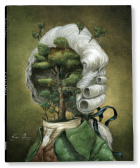
Berenice
Dicebant mihi sodales, si sepulchrum amicae visitarem, curas meas
aliquantulum fore levatas. --EBN ZAIAT
Misery is manifold. The wretchedness of earth is multiform.
Overreaching the wide horizon as the rainbow, its hues are as
various as the hues of the arch,--as distinct too, yet as
intimately blended. Overreaching the wide horizon as the
rainbow. How is it that from beauty I have derived a type of
unloveliness?--from the covenant of peace a simile of sorrow?
But as, in ethics, evil is a consequence of good, so, in fact,
out of joy is sorrow born. Either the memory of past bliss is
the anguish of to-day, or the agonies which have their
origin in the ecstasies which .
My baptismal name is Egaeus; that of my family I will not
mention. Yet there are no towers in the land more time-honoured
than my gloomy, grey, hereditary halls. Our line has been called
a race of visionaries; and in many striking particulars--in the
character of the family mansion--in the frescoes of the chief
saloon--in the tapestries of the dormitories--in the chiselling
of some buttresses in the armory--but more especially in the
gallery of antique paintings--in the fashion of the library
chamber--and, lastly, in the very peculiar nature of the
library's contents, there is more than sufficient evidence to
warrant the belief.
The recollections of my earliest years are connected with
that chamber, and with its volumes--of which latter I will say no
more. Here died my mother. Herein was I born. But it is mere
idleness to say that I had not lived before--that the soul has no
previous existence. You deny it?--let us not argue the matter.
Convinced myself, I seek not to convince. There is however, a
remembrance of aerial forms--of spiritual and meaning eyes--of
sounds, musical yet sad--a remembrance which will not be
excluded; a memory like a shadow, vague, variable, indefinite,
unsteady; and like a shadow, too, in the impossibility of my
getting rid of it while the sunlight of my reason shall exist.
In that chamber was I born. Thus awaking from the long
night of what seemed, but was not, nonentity, at once into the
very regions of fairy-land--into a palace of imagination--into
the wild dominions of monastic thought and erudition--it is not
singular that I gazed around me with a startled and ardent eye-that I loitered away my boyhood in books, and dissipated my youth
in reverie; but it singular that as years rolled away, and
the noon of manhood found me still in the mansion of my fathers-it is wonderful what stagnation there fell upon the springs of my
life--wonderful how total an inversion took place in the
character of my commonest thought. The realities of the world
affected me as visions, and as visions only, while the wild ideas
of the land of dreams became, in turn,--not the material of my
every-day existence--but in very deed that existence utterly and
solely in itself.
*
Berenice and I were cousins, and we grew up together in my
paternal halls. Yet differently we grew--I ill of health, and
buried in gloom--she agile, graceful, and overflowing with
energy; hers the ramble on the hill-side--mine the studies of the
cloister--I living within my own heart, and addicted body and
soul to the most intense and painful meditation--she roaming
carelessly through life with no thought of the shadows in her
path, or the silent flight of the raven-winged hours. Berenice!-I call upon her name--Berenice!--and from the grey ruins of
memory a thousand tumultuous recollections are startled at the
sound! Ah! vividly is her image before me now, as in the early
days of her light-heartedness and joy! Oh! gorgeous yet
fantastic beauty! Oh! sylph amid the shrubberies of Arnheim!
Oh! Naiad among its fountains!--and then--then all is mystery and
terror, and a tale which should not be told. Disease--a fatal
disease--fell like the simoom upon her frame, and, even while I
gazed upon her, the spirit of change swept over her, pervading
her mind, her habits, and her character, and, in a manner the
most subtle and terrible, disturbing even the identity of her
person! Alas! the destroyer came and went, and the victim--where
was she? I knew her not--or knew her no longer as Berenice.
Among the numerous train of maladies superinduced by that
fatal and primary one which effected a revolution of so horrible
a kind in the moral and physical being of my cousin, may be
mentioned as the most distressing and obstinate in its nature, a
species of epilepsy not unfrequently terminating in
itself--trance very nearly resembling positive dissolution, and
from which her manner of recovery was, in most instances,
startlingly abrupt. In the meantime my own disease--for I have
been told that I should call it by no other appellation--my own
disease, then, grew rapidly upon me, and assumed finally a
monomaniac character of a novel and extraordinary form--hourly
and momently gaining vigour--and at length obtaining over me the
most incomprehensible ascendancy. This monomania, if I must so
term it, consisted in a morbid irritability of those properties
of the mind in metaphysical science termed the . It
is more than probable that I am not understood; but I fear,
indeed, that it is in no manner possible to convey to the mind of
the merely general reader, an adequate idea of that nervous
intensity of interest> with which, in my case, the powers of
meditation (not to speak technically) busied and buried
themselves, in the contemplation of even the most ordinary
objects of the universe.
To muse for long unwearied hours with my attention riveted
to some frivolous device on the margin, or in the typography of a
book; to become absorbed for the better part of a summer's day,
in a quaint shadow falling aslant upon the tapestry, or upon the
door; to lose myself for an entire night in watching the steady
flame of a lamp, or the embers of a fire; to dream away whole
days over the perfume of a flower; to repeat monotonously some
common word, until the sound, by dint of frequent repetition,
ceased to convey any idea whatever to the mind; to lose all sense
of motion or physical existence, by means of absolute bodily
quiescence long and obstinately persevered in;--such were a few
of the most common and least pernicious vagaries induced by a
condition of the mental faculties, not, indeed, altogether
unparalleled, but certainly bidding defiance to anything like
analysis or explanation.
Yet let me not be misapprehended.-- The undue, earnest, and
morbid attention thus excited by objects in their own nature
frivolous, must not be confounded in character with that
ruminating propensity common to all mankind, and more especially
indulged in by persons of ardent imagination. It was not even,
as might at first be supposed, an extreme condition, or
exaggeration of such propensity, but primarily and essentially
distinct and different. In the one instance, the dreamer, or
enthusiast, being interested by an object usually
frivolous, imperceptibly loses sight of this object in a
wilderness of deductions and suggestions issuing therefrom,
until, at the conclusion of a day-dream
luxury>, he finds the or first cause of his
musings entirely vanished and forgotten. In my case the primary
object was , although assuming, through
the medium of my distempered vision, a refracted and unreal
importance. Few deductions, if any, were made; and those few
pertinaciously returning in upon the original object as a centre.
The meditations were pleasurable; and, at the
termination of the reverie, the first cause, so far from being
out of sight, had attained that supernaturally exaggerated
interest which was the prevailing feature of the disease. In a
word, the powers of mind more particularly exercised were, with
me, as I have said before, the , and are, with the
day-dreamer, the .
My books, at this epoch, if they did not actually serve to
irritate the disorder, partook, it will be perceived, largely, in
their imaginative and inconsequential nature, of the
characteristic qualities of the disorder itself. I well
remember, among others, the treatise of the noble Italian Coelius
Secundus Curio, ; St Austin's
great work, ; and Tertullian,
Christi>, in which the paradoxical sentence, i Mortuus est Dei
filius; credibile est quia ineptum est: et sepultus resurrexit;
certum est quia impossibile est>occupied my undivided time,
for many weeks of laborious and fruitless investigation.
Thus it will appear that, shaken from its balance only by
trivial things, my reason ...
|
|
|
|
|
|
|
|
|


 Go to the beginning of the document
 Go to previous page
 Go to next page
 Go to the end of document