

CATHER WILLA SIBERT
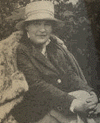 Willa Sibert Cather (1876-1947)
American author: she was born in Winchester, Virginia, in 1876.
When she was nine her family moved to the Nebraska prairie frontier. She graduated from the University of Nebraska in 1895 (she had first arrived at the University dressed as William Cather, her opposite sex twin), then she worked as a journalist and as a teacher in Pittsburgh. Her first book was a poetry collection, April Twilights (1903).
In 1904 she went to New York City. The Troll Garden (1905), her first collection of short stories, led to her appointment to the editorial staff of "McClure's Magazine". She eventually became managing editor and saved the magazine from financial disaster. After the publication of Alexander's Bridge in 1912, she left "McClure's" and devoted herself to creative writing. For many years she lived quietly in New York City's Greenwich Village with her companion, Edith Lewis. The first of her novels to deal with her major theme is O Pioneers! (1913), a celebration of the courage of the frontier settlers. Other novels with this theme are My Ántonia (1918), One of Ours (1922; Pulitzer Prize), and A Lost Lady (1923). The Song of the Lark (1915) focuses on another of Cather's major preoccupations — the need of artists to free themselves from inhibiting influences, particularly that of a rural or small-town background; the tales collected in Youth and the Bright Medusa (1920) and the novel Lucy Gayheart (1935) also treat this theme.
With success and increasing age Cather became convinced that the beliefs and way of life she valued were disappearing. This disillusionment is evident in her novel The Professor's House (1925). She subsequently turned to North America's far past for her material: in Death Comes for the Archbishop (1927), considered by some critics her greatest novel, she deals with the missionary experiences of a Roman Catholic bishop among the Indians of New Mexico; and in Shadows on the Rock, (1931) describing French Roman Catholic life in 17th-century Québec. Sapphira and the Slave Girl, her last novel and her only book set in the South, the land of her forebears, was published in 1940. The volumes My Mortal Enemy (1926) and The Old Beauty and Others (1948) present her highly skilled shorter fiction. Her intense interest in the craft of fiction is shown in the essays in Not Under Forty (1936) and On Writing (1949). Cather herself was a master of that craft, her novels and stories written in a pellucid style of great charm and stateliness. Her own clear, charming, and stately style is among the finest in 20th-century American literature.
Cather died on April 24, 1947, in New York City.
-
Libri.it




-
Illustrati
-
